Health & Safety Policy for Office Clearance Turnham Green
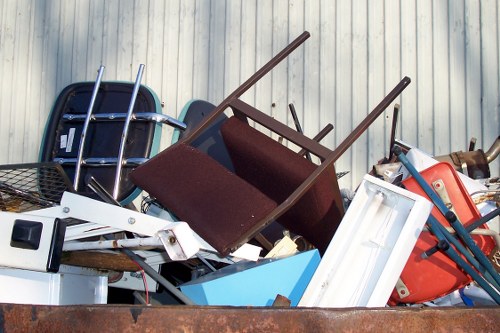 Purpose: This policy sets out clear responsibilities and safe working practices for staff and contractors engaged in office clearance and rubbish removal in and around Turnham Green. It is designed to ensure that every clearance, disposal or waste-handling activity is carried out with minimal risk to people, property and the environment. The document applies to all operations provided by the clearance team, including internal office clear-outs, furniture removal, electronic waste handling and general rubbish collection. It supports a culture of safety and continuous improvement across the rubbish company service area.
Scope: The policy covers operational procedures, training requirements, risk assessments and emergency actions for each clearance job. It applies to permanent staff, temporary operatives and approved subcontractors performing office clearance duties. The aim is to deliver a consistent, safe service whether undertaking a small office tidy or a full Turnham Green office clearance project.
 Responsibilities: Management will ensure that adequate resources and supervision are available to deliver safe waste removal services. Supervisors are required to carry out pre-job checks and to confirm that operatives have appropriate PPE, equipment and competence to complete the task. Operatives must follow safe systems of work, report hazards promptly and refuse to undertake tasks they consider unsafe. Clients are asked to declare any potential hazards prior to job commencement.
Risk Management and Safe Systems
Risk assessment: Before every job the team will complete a formal risk assessment tailored to the specific office clearance or rubbish collection activity. This will identify manual handling risks, sharps or hazardous materials, electrical risks, fire risks and access or egress issues. Where appropriate, tasks will be broken into discrete steps and control measures recorded. Control measures may include mechanical aids for lifting, two-person lifts for large items, and exclusion zones for public safety.
 Personal Protective Equipment (PPE): Operatives are required to wear suitable PPE for each task. Typical items include high-visibility clothing, gloves suitable for waste handling, safety boots, and eye protection. For specialist removals, additional protection such as respirators may be used. PPE is considered a last line of defence and is used in combination with safe systems and engineering controls to reduce exposure to hazards.
Training and competence: All staff undertake induction training and regular refresher sessions covering manual handling, hazardous waste awareness, COSHH fundamentals and safe vehicle loading. Training records are maintained and competency checks are completed for specialist tasks. The rubbish removal crew must demonstrate knowledge of safe lifting techniques and correct use of mechanical aids.
Operational Controls, Waste Segregation and Emergency Response
Operational controls: The company operates clear procedures for job planning, communication and site set-up. Vehicles are loaded to minimise shifting and secure loads with appropriate straps. Electronic equipment and confidential documents are handled separately and either recycled or destroyed according to client instructions. Strong supervision and on-site briefings ensure that each crew member understands their role on collection and clearance jobs.
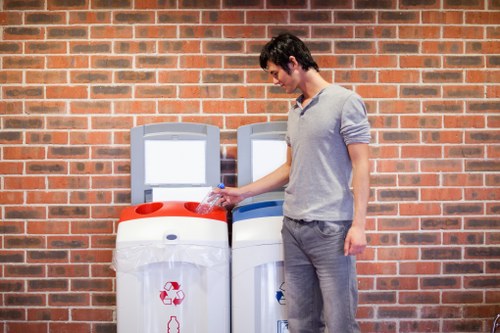
 Waste segregation and sustainability: The policy emphasises recycling and responsible disposal. Waste is segregated at source into recyclable materials, general refuse and hazardous items. The team aims to divert as much material as possible from landfill by partnering with licensed waste-processing facilities. Key steps include identifying recyclable furniture and office fixtures, separating paper and cardboard and managing electronic waste through authorised channels.
 Emergency procedures: Emergency response plans include procedures for spill control, first aid, fire and accident reporting. First aid equipment is carried on site and personnel trained in first aid are available for all larger clearances. All incidents, near misses and unsafe conditions are recorded and reviewed to prevent recurrence and to continuously improve the clearance service.
Monitoring and review: The policy is reviewed regularly to reflect operational learning and to incorporate best practice in office clearance and rubbish company operations. Audits and spot checks are used to verify compliance with the policy, and any non-conformances are addressed through corrective action plans. Management will review risk assessments, training outcome and incident trends to update procedures.
Key control elements include:
- Pre-job risk assessments
- Competency-based training
- Proper PPE usage
- Secure vehicle loading and environmental controls
Commitment: The organisation is committed to achieving safe, efficient and environmentally responsible office clearance and waste removal services. Everyone involved in a clearance has a role to play — from planning and supervision to practical handling and waste segregation. Continual improvement is central to the policy so that the clearance service remains effective, compliant and focused on the wellbeing of people and the environment.
