Turnham Green Station: bulk waste disposal nearby
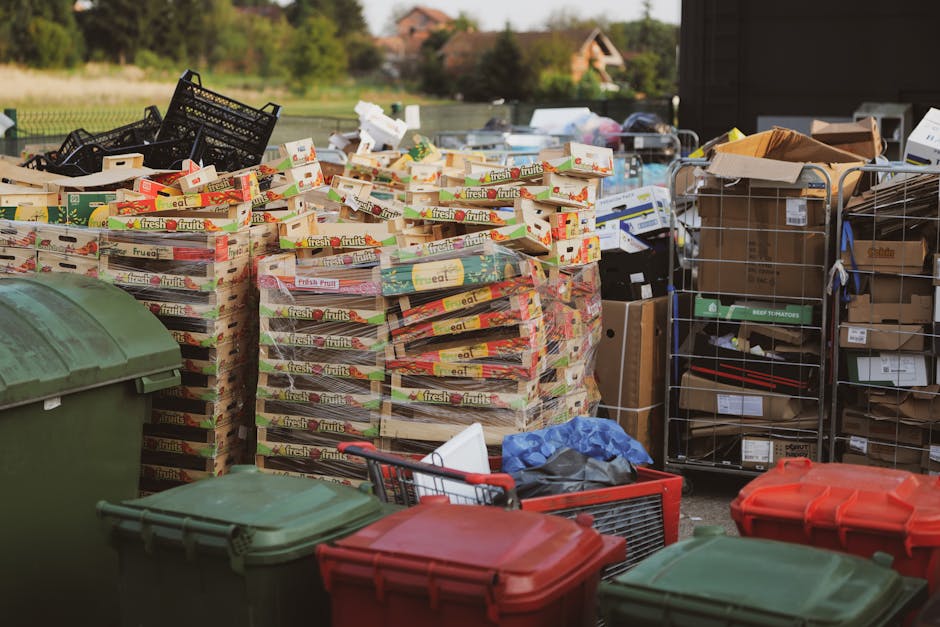
If you are trying to clear a sofa, broken wardrobe, old office chairs, or a full mix of bulky items near Turnham Green Station, the process can feel oddly bigger than the waste itself. One minute it is "just a bit of clutter"; the next, you are dealing with access, timing, parking, lifting, and what on earth counts as recyclable. This guide on Turnham Green Station: bulk waste disposal nearby walks you through the practical side of it, so you can make a sensible choice without wasting half a day on guesswork. We will look at how bulk waste disposal typically works in the area, what to check before you book, and how to avoid the common mistakes that slow people down.
Truth be told, bulky waste removal is rarely about the waste alone. It is about convenience, responsibility, and not turning a simple clear-out into a weekend headache. Whether you are clearing a flat, a shop, an office, or a house that has accumulated far too much "I'll deal with that later", you should come away from this with a clear next step.
Why Turnham Green Station: bulk waste disposal nearby Matters
Turnham Green Station sits in a part of west London where homes, flats, small businesses, and shared buildings often juggle limited space. That matters because bulky waste is hard to hide, hard to move, and hard to ignore. A mattress leaning against a hallway wall or a dismantled desk in the front room is not just inconvenient; it can block access, create fire-safety issues, and make a property feel instantly more cluttered than it really is.
In practical terms, bulk waste disposal nearby matters because it saves time and reduces friction. If you live or work close to the station, you may not have the luxury of a driveway, a large loading bay, or a spare afternoon to make multiple trips. A good disposal arrangement means less lifting, less stress, and fewer last-minute problems with neighbours or building managers. That is the real value here. Not glamorous, but very useful.
There is also the local reality of London streets: parking can be tight, access can be narrow, and a badly planned collection can become a small drama at the kerb. You do not want to drag a wardrobe through a busy entrance at 8:30am while everyone else is trying to get on with their day. Small issue, big annoyance.
Expert summary: near Turnham Green Station, the smartest bulk waste approach is usually the one that balances speed, access, and responsible disposal. If an item is large, awkward, or time-sensitive, the "cheapest" option is not always the most economical once your time and effort are counted properly.
How Turnham Green Station: bulk waste disposal nearby Works
Bulk waste disposal is the organised removal of large items or significant volumes of unwanted material that do not fit normal household waste collections. Think sofas, beds, cabinets, office furniture, shop fittings, bags of mixed clear-out waste, or garden debris after a bigger job. Nearby disposal services usually work in one of a few ways: a one-off collection, a pre-booked clearance, a same-day uplift if available, or a larger project-based removal.
The process is usually straightforward, even if the item itself is not. First, you identify what needs removing. Then you check whether anything can be reused, donated, or separated for recycling. After that, you arrange collection or disposal and make sure access is ready. That means doors unlocked, pathways clear, and any parking or building instructions shared in advance. In our experience, a few minutes of preparation can save a lot of back-and-forth.
Near Turnham Green Station, access matters more than many people expect. Flats above shops, basement steps, tight stairwells, and shared hallways can all influence the method. A bulky item that looks simple in a living room may be awkward once it reaches a narrow landing. If that sounds familiar, yes, you are not the first person to stare at a wardrobe and think, "How did this get in here in the first place?"
Good disposal services will normally ask about:
- the type and quantity of items
- whether anything is heavy, fragile, or dismantled
- building access and parking options
- how urgently the waste needs removing
- whether items can be recycled or reused
This is also where related services can be useful. If you are clearing a whole property rather than one or two items, pages such as house clearance and flat clearance may be more relevant than a simple item-only uplift. For mixed household waste, the broader waste removal service may fit better than a single-item disposal plan.
Key Benefits and Practical Advantages
The obvious benefit is convenience, but there is a bit more to it than that. Bulk waste disposal nearby can reduce the physical strain of lifting heavy items, especially if you are dealing with stairs or awkward corners. It can also help you keep the property usable while the clear-out is happening, which matters if the building is occupied, on the market, or being prepared for work.
Another major advantage is speed. Bulky waste tends to linger. One item becomes three, then six, then suddenly you are planning your life around an old sofa. A nearby service can shorten that cycle and help you make visible progress fast.
Other practical benefits include:
- Better space management: rooms feel usable again once large items are removed.
- Less risk of damage: professional lifting and carrying can reduce scuffs, scratches, and strain on floors or walls.
- Improved safety: fewer trip hazards and less blocked access.
- Cleaner sorting: items can be separated more sensibly for reuse, recycling, or disposal.
- Less hassle for neighbours: quicker removal means less hallway congestion and fewer complaints.
There is also a sustainability angle. If items are separated properly, some materials may be recycled or diverted from landfill where possible. For people who want a more responsible route, it is worth looking at a provider's recycling and sustainability approach before booking. Small detail, but it tells you a lot about how they operate.
Who This Is For and When It Makes Sense
Bulk waste disposal near Turnham Green Station is for anyone who has more to remove than a normal bin collection can handle. That might sound obvious, but the real trigger is often not the volume. It is the combination of size, awkwardness, and urgency.
This service makes sense if you are:
- moving home and need to clear furniture before handover
- refreshing a rental property between tenancies
- replacing old office furniture
- clearing a garage, loft, or basement
- dealing with renovation offcuts or light builders waste
- preparing a property for sale, letting, or refurbishment
- getting rid of bulky garden waste after seasonal work
It can also be a good fit when you simply do not want the logistics burden. Not everyone wants to hire a van, load heavy items, find parking, and then repeat the process at a recycling point. To be fair, most people do not. If your time is already stretched, bringing in a service often makes more sense than trying to make a "quick trip" that somehow eats your whole Saturday.
For larger clear-outs, there is often a choice between specialised services. A cluttered office will usually benefit from office clearance or business waste removal, while a household with mixed items might need home clearance or furniture disposal. Matching the service to the actual waste usually saves time and avoids confusion on the day.
Step-by-Step Guidance
If you want the process to go smoothly, a bit of structure helps. Here is a simple, practical way to approach bulk waste disposal nearby without overcomplicating it.
- List the items clearly. Write down what needs removing and note anything especially heavy, dirty, fragile, or attached to fittings.
- Separate reusable from disposable items. A chair with life left in it may be better handled through reuse or donation routes if suitable. A broken one is different.
- Measure access points. Doorways, stair turns, lifts, and narrow corridors can decide whether an item needs dismantling. This matters more than people think.
- Check the building situation. If you are in a flat, a managed property, or a shared building, confirm any collection rules or time restrictions.
- Prepare the area. Clear a path, remove loose objects, and make items easy to reach. This sounds small. It is not.
- Choose the right disposal route. Single bulky item, furniture-only uplift, full property clearance, or mixed waste removal? Pick the one that actually fits.
- Confirm what happens next. Make sure you understand what is included, when collection will happen, and whether sorting is needed before the team arrives.
- Keep an eye on final tidying. Once the waste is gone, check for small remnants, fixings, or packaging that may have been missed.
A lot of problems happen because the first step was skipped. People rush to book, then realise the item will not fit through the stairwell. Or they forget a mattress topper, a broken chair, and two bags of mixed waste tucked in the corner. Little things, but they add up.
Expert Tips for Better Results
Here is the practical advice that usually makes the biggest difference.
- Sort before collection. Mixed piles take longer to process. If you can separate metal, wood, textiles, and general waste ahead of time, you give the team a cleaner job and reduce confusion.
- Disassemble where sensible. Flat-pack furniture, bed frames, and modular desks are often easier to move in pieces. Do not force it if you are unsure, though. Stripped screws and broken edges help nobody.
- Take photos if the waste is awkward. A quick picture can help explain access issues or item size far better than a rushed phone call.
- Be realistic about weight. A large wardrobe may not look heavy until it needs lifting down three flights of stairs. Then reality arrives, usually all at once.
- Keep fragile surfaces protected. Hallways, bannisters, and lifts can be scuffed easily. Blankets, cardboard, or corner protection can help if the removal path is tight.
- Think about timing. Early mornings are often calmer for collections, while midday can be better if you need neighbours or staff to be out of the way.
One small tip that helps more than people expect: label what is definitely going and what must stay. A sticky note or marker pen can prevent an accidental "sort-out" disaster. Nobody wants to lose the one thing they actually needed.
If the waste is part of a larger declutter, related services such as garage clearance, loft clearance, or garden clearance may be a better fit than treating every item separately. That choice alone can simplify the whole job.
Common Mistakes to Avoid
The most common mistakes are usually the simplest ones. That is annoying, but also helpful, because they are easy to fix once you notice them.
- Underestimating volume: what looks like "a few things" can turn into a van-load once it is all together.
- Not checking access: items that fit in the room may not fit around corners or down stairs.
- Leaving everything until collection day: last-minute sorting slows the job and increases stress.
- Mixing hazardous or restricted items with general waste: these often need separate handling.
- Ignoring building rules: some blocks have loading restrictions, lift reservations, or quiet hours.
- Choosing a service that is too narrow: furniture-only disposal will not suit a mixed clear-out, and the reverse is just as awkward.
There is also a subtle mistake people make: trying to save time by not describing the waste properly. It sounds efficient. It rarely is. If the disposal team turns up expecting three chairs and finds a full room of mixed items, the schedule gets messy very quickly. A bit of accuracy upfront helps everyone.
Tools, Resources and Recommendations
You do not need a toolkit the size of a builder's van, but a few simple items help enormously. If you are preparing for bulk waste disposal nearby, these are the basics we would suggest:
- work gloves for grip and minor protection
- strong sacks or bags for loose waste
- a tape measure for doors, lifts, and large furniture
- a screwdriver or Allen key for dismantling flat-pack furniture
- blankets or cardboard to protect floors and walls
- a marker pen or labels for sorting items
For broader clear-outs, it can help to think in categories. Furniture can often be handled separately through furniture clearance or furniture disposal. If you are tackling renovation debris, builders waste clearance may be the better route. And if you are simply trying to clear a pile of mixed household items, a general house clearance or home clearance approach may be more practical.
Quick recommendation: if you are unsure which service fits, start by listing the largest item and the messiest item. Those two usually tell the real story.
Law, Compliance, Standards, or Best Practice
Bulk waste disposal is not only a convenience issue; it also carries basic duty-of-care expectations. In the UK, waste should be handled by people and services that deal with it responsibly, and you should be careful about who takes it away. That is especially true for commercial waste, mixed loads, and anything that could contain restricted materials.
You do not need to become a legal expert to make a sensible choice. Just keep a few best-practice points in mind:
- Use a proper waste route: do not hand over waste casually to someone who cannot explain where it goes.
- Separate special items: some items require extra care or separate treatment.
- Keep records where relevant: businesses often need a clearer paper trail than households.
- Be cautious with electrical items: old electronics and office equipment should be treated appropriately.
- Check insurance and safety practices: lifting heavy items in tight buildings should be done carefully.
For peace of mind, it is sensible to look at pages such as insurance and safety and health and safety policy if you want to understand how a provider approaches risk. That is not overcautious. It is just sensible. A clean job should still be a safe one.
For public-facing service standards, complaints handling, and data/privacy matters, it can also be helpful to know the provider's broader policies, including complaints procedure, privacy policy, and terms and conditions. A few minutes reading now can save a misunderstanding later.
Options, Methods, or Comparison Table
There is no single best way to handle bulky waste near Turnham Green Station. The right option depends on what you are removing, how quickly you need it gone, and how much access you have. Here is a simple comparison to help you think it through.
| Option | Best for | Main advantage | Possible drawback |
|---|---|---|---|
| DIY disposal | Small amounts and those with access to transport | Can be cheaper if you already have the equipment | Time-consuming, physically demanding, and often awkward in London traffic |
| Single-item collection | One or two bulky pieces such as a sofa or bed | Simple and focused | May not suit mixed waste or larger clear-outs |
| Furniture-specific disposal | Old beds, wardrobes, desks, and seating | Well matched to bulky household items | Not ideal if the clear-out includes lots of non-furniture waste |
| Full clearance service | Flats, offices, garages, lofts, or mixed rooms | Best for larger, messier jobs | More planning needed to define scope |
| Builders waste clearance | Light renovation debris and project leftovers | Useful for refurbishment jobs | May not suit furniture-heavy or domestic-only waste |
If you are only disposing of one item, a targeted service is usually enough. If you are trying to clear a whole room or property, going broader is often less stressful in the end. That is the funny thing about waste disposal: choosing the narrower option can sometimes create the wider problem.
Case Study or Real-World Example
Picture a typical local scenario. A small flat near Turnham Green Station needs to be handed back at the end of a tenancy. There is a mattress, a broken chair, a coffee table, a shelving unit, and several bags of mixed clutter from the cupboards. Nothing dramatic on its own, but together it has become a bit of a wall of stuff in a one-bedroom flat with a narrow hallway.
The first instinct is often to sort it later. Then later becomes tomorrow, and tomorrow becomes the day before checkout. So the resident measures the items, checks the stairwell, and realises the shelving unit needs dismantling. The mattress is awkward but manageable, the chair is fine, and the bags are straightforward. Once the items are listed properly, it becomes clear that a mixed clearance is more suitable than trying to organise four separate solutions.
What changed the outcome? Preparation. The resident grouped the items, cleared the route to the front door, and took a quick photo of the storage cupboard area so the collection could be planned realistically. The job stopped feeling like a mess and started feeling like a process.
That is the real lesson. Nearby bulk waste disposal works best when you treat it as a small project rather than a random errand. A little structure goes a long way, even if the room looks like chaos at the start. And let's face it, most of us have had at least one room like that.
Practical Checklist
Use this checklist before arranging bulk waste disposal near Turnham Green Station:
- List every item that needs removing
- Separate reusable items from true waste
- Measure large furniture and awkward access points
- Check stairs, lifts, door widths, and parking access
- Confirm whether items need dismantling
- Identify any special or restricted waste
- Clear a path from the items to the exit
- Take photos if the load is unusual or mixed
- Choose the right service type for the actual job
- Make sure building rules or timings will not get in the way
- Keep contact details handy on the day
- Do a final sweep once the removal is complete
Key takeaway: the smoother bulk waste disposal feels, the more likely it is that the planning was done properly. If the job looks simple on paper, it usually goes better in real life. Funny how that works.
Get a free quote today and see how much you can save.
Conclusion
Finding the right bulk waste disposal nearby Turnham Green Station is mostly about matching the service to the real job. If you have one bulky item, keep it simple. If you have a mixed pile, think in terms of clearance. If access is tight, plan for that early instead of pretending it will sort itself out. It rarely does.
When you approach it properly, the whole thing becomes much easier: less lifting, fewer delays, better use of space, and a cleaner end result. That is what people want most of the time, even if they start by saying they just need "a quick bit of rubbish gone". Fair enough. We all say that.
With a bit of preparation and the right disposal route, you can clear the clutter without the usual stress. And once the last bulky item is out, the place often feels lighter straight away - quieter, too, in that small satisfying way only a cleared room can manage.
Frequently Asked Questions
What counts as bulk waste near Turnham Green Station?
Bulk waste usually means large or awkward items that are too big for normal household bins or standard collections. Sofas, mattresses, wardrobes, desks, and mixed clear-out items are common examples.
Can I arrange bulk waste disposal for just one item?
Yes, many people do. A single sofa, bed frame, or old cabinet can be removed on its own if that is all you need. It is often the simplest option for small jobs.
Is it better to use furniture disposal or general waste removal?
It depends on what you have. If the load is mostly sofas, chairs, beds, or cabinets, furniture-specific disposal may fit better. If the waste is mixed, general waste removal or a full clearance is usually more practical.
Do I need to dismantle furniture before collection?
Not always. But if an item is too large for stairwells, lifts, or doorways, dismantling may help. When in doubt, measure first rather than guessing.
How should I prepare for bulk waste collection?
Clear access routes, separate items where possible, confirm parking or building access, and make sure the waste is easy to identify. A little prep makes the job far smoother.
What if my waste includes a mix of furniture and renovation debris?
That is common. In that case, a mixed waste or broader clearance service is usually more suitable than a furniture-only collection. The key is describing the load accurately.
Can bulk waste be recycled?
Sometimes, yes. It depends on the material and condition of the items. Metal, wood, and some furniture components may be suitable for recycling or reuse where possible.
Is bulk waste disposal suitable for flats and shared buildings?
Yes, but access planning matters more. Shared entrances, narrow stairs, lifts, and building rules can all affect the collection, so it is worth checking these in advance.
What is the difference between a clearance and a disposal service?
Disposal usually focuses on removing specific waste items. Clearance tends to cover a broader, more complete job, such as clearing a room, loft, garage, flat, or office.
How do I choose the right service near Turnham Green Station?
Start with the type of waste, then think about volume, access, and urgency. If the job is small and simple, a targeted uplift may be enough. If it is mixed or larger, a clearance-style service is often the smarter choice.
Is there anything I should avoid putting in with bulky waste?
Yes. Some items need separate handling, especially anything that is hazardous, restricted, or likely to require special treatment. If you are unsure, ask before collection so nothing is mixed in by accident.
What is the best time to arrange bulky waste removal?
Usually the best time is when access is easiest and there is enough time to prepare properly. Early collection windows can work well, especially in busier streets, but the main goal is to avoid rushing the process.
Can business customers use bulk waste disposal nearby?
Absolutely. Offices, shops, and shared workplaces often need clearance for furniture, stock, or mixed waste. In those cases, a business waste solution is often the cleaner fit.
How do I avoid surprise problems on the day?
Give a full description of the waste, check access, and prepare the items before the team arrives. Most surprises come from incomplete information, not from the waste itself.
Sometimes the best home or business improvement is simply getting the heavy, awkward stuff out of the way. When that happens, the room breathes a bit easier - and so do you.